The Triple Nickles: The Unit That Jumped Into History Before Integration Ever Existed

There are stories in military history that are widely taught — and then there are the ones that quietly carried the weight of progress before the country was even ready to acknowledge it.
The 555th Parachute Infantry Battalion, known as the Triple Nickles, is one of those stories.
And I’ll be honest — this one has stayed with me personally.
Back in 2012, I actually wrote about the Triple Nickles for our base newspaper. I wish I still had the link to that article today. But what I do have is a continued respect for what this unit represents — not just in military history, but in the long, complicated path toward integration, recognition, and equity in the armed forces.
So if you’ve never heard of them before — here’s why you should.
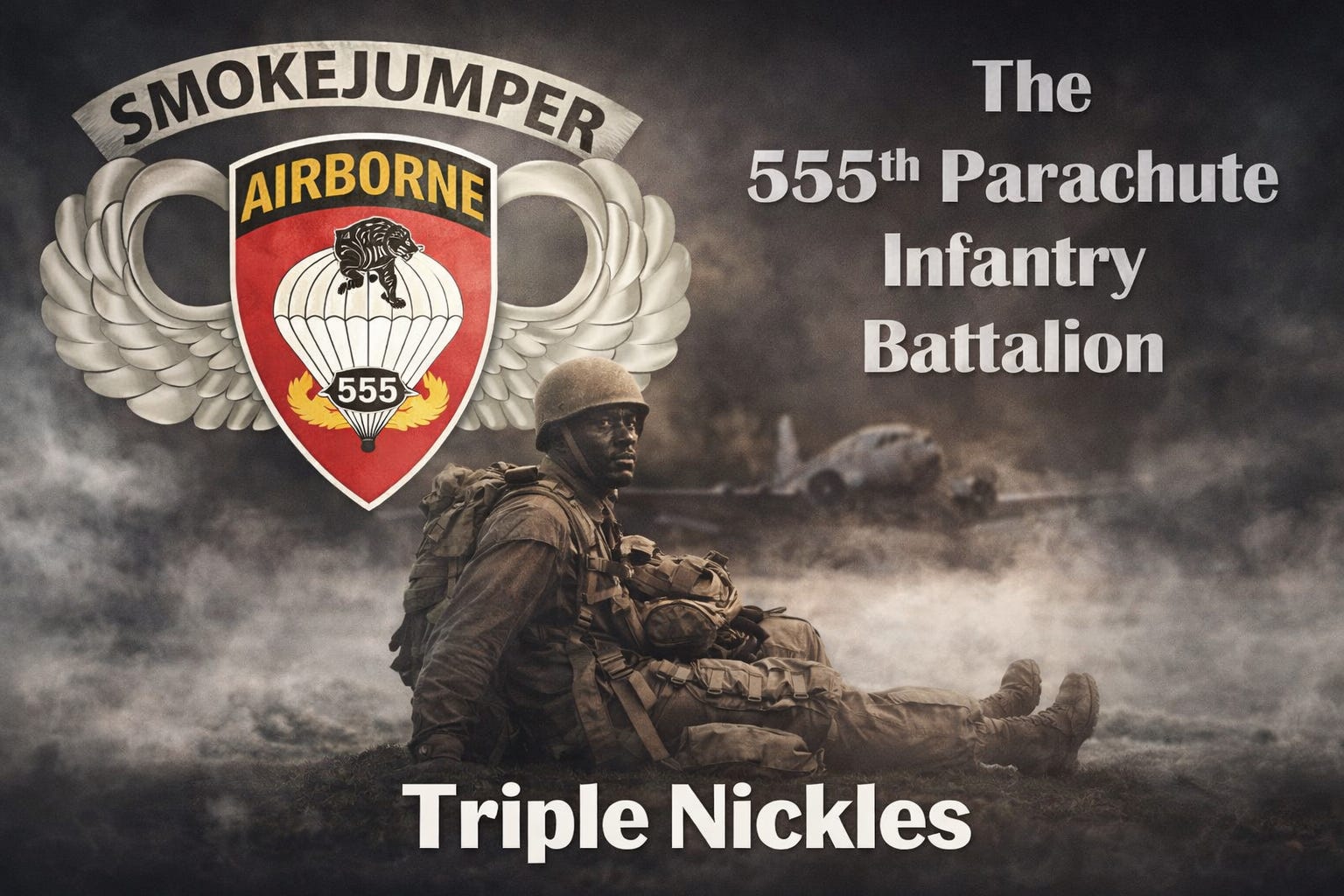
Who Were the Triple Nickles?
Formed in 1943 during World War II, the 555th Parachute Infantry Battalion became the first all-Black paratrooper unit in U.S. military history.
At the time, the U.S. military was still segregated by race. Black service members were often assigned to support or labor roles — rarely given access to elite combat training like airborne operations.
But after growing pressure to allow Black soldiers into frontline and specialized units, an all-Black parachute company was finally authorized and activated at Fort Benning, Georgia.
The men who volunteered knew they weren’t just signing up for a mission — they were stepping into a test.
They were under constant scrutiny, expected to fail, and forced to prove that they belonged in one of the Army’s most demanding training pipelines.
They passed.
Jump School graduation made them pioneers overnight.
A Secret Mission on American Soil
Many of these soldiers believed they were being trained for deployment overseas.
Instead, in 1945, they were sent to the Pacific Northwest — specifically to Oregon, Washington, and California — for a classified operation known as Operation Firefly.
While most airborne units of World War II were deployed overseas into combat zones across Europe or the Pacific, the 555th Parachute Infantry Battalion — the Triple Nickles — were assigned to serve on United States soil.
Rather than engaging enemy forces abroad, the Triple Nickles were tasked with defending the American homeland from an unexpected and largely unknown threat.
During World War II, Japan launched more than 9,000 incendiary Fu-Go balloon bombs into the jet stream, designed to travel across the Pacific Ocean and land in North America. These balloon bombs carried explosive and fire-starting devices intended to ignite large-scale wildfires in heavily forested areas of the western United States.
The goal was simple — overwhelm U.S. emergency response systems, cause destruction of natural resources, create panic among civilians, and divert military attention and manpower away from overseas operations.
With many trained firefighters already deployed to the war effort abroad, the U.S. Army turned to the Triple Nickles to take on a mission that required both airborne skill and environmental response.
As part of this classified effort known as Operation Firefly, the men of the 555th became the nation’s first military smokejumpers.
Their responsibilities included:
Parachuting into remote wilderness areas
Locating unexploded balloon bombs
Disarming incendiary devices when possible
Suppressing forest fires before they spread
Protecting civilian populations and infrastructure
Securing bomb impact zones in difficult terrain
Between May and October of 1945, the Triple Nickles conducted over 1,200 individual parachute jumps into rugged forests and mountainous landscapes across the Pacific Northwest — often landing in dangerous conditions with limited visibility, rough terrain, and minimal ground support.
These were not training exercises.
These were active homeland defense operations carried out under real threat of detonation, wildfire spread, and environmental hazard.
Although they never deployed overseas before the war ended, their service helped prevent widespread destruction across multiple U.S. states and contributed to one of the earliest forms of integrated operational support between military airborne units and civilian emergency response efforts.
They became America’s first military smokejumpers — using combat-grade airborne training to defend the homeland in a completely different kind of war zone.
Not in Europe.
Not in the Pacific Theater.
But right here — on U.S. soil.
They were fighting a different kind of war.
One that had already landed at home.
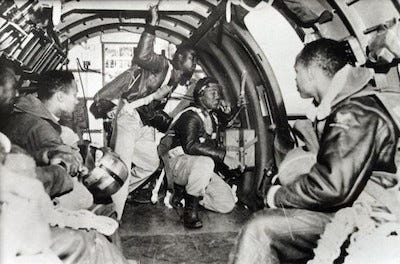
Why Their Legacy Matters
Despite their service, the Triple Nickles were never deployed into overseas combat before the war ended.
But their impact didn’t stop there.
After WWII, members of the 555th were integrated into the 505th Parachute Infantry Regiment of the 82nd Airborne Division, helping to make it one of the first integrated combat units in the U.S. Army.
This happened before full desegregation of the military took hold.
Their presence helped dismantle long-standing assumptions about who could serve in elite operational roles — proving that ability, discipline, and courage had nothing to do with race.
They didn’t just jump into forests to stop fires.
They helped ignite institutional change.
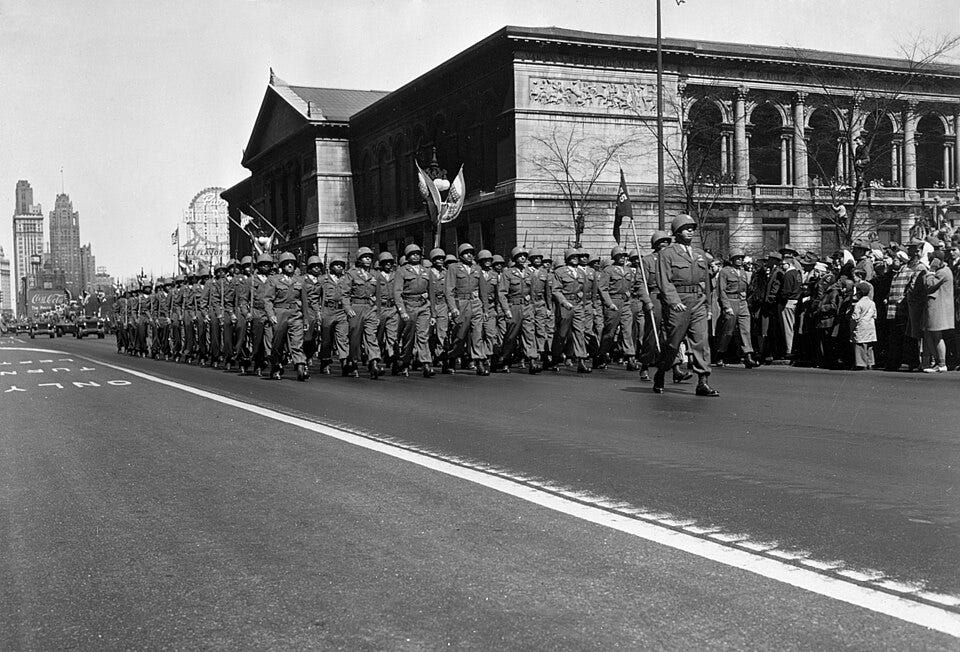
The 555th Parachute Infantry Battalion (The Triple Nickle) marching in Washington, D.C. on April 6, 1945
A Legacy That Shouldn’t Be Forgotten
Military history often celebrates battlefield victories — but rarely the quiet groundwork that made future victories possible.
The Triple Nickles didn’t receive ticker-tape parades.
They weren’t widely featured in textbooks.
But they:
Became the first Black paratroopers in U.S. history
Completed dangerous domestic missions in defense of the homeland
Opened the door for integration into airborne combat units
Changed the trajectory of who could serve — and where
And for many of us who served later… their story became part of how we understood our own place in uniform.
Conclusion: More Than a Unit — A Turning Point
The story of the Triple Nickles isn’t just about parachutes, wildfires, or a classified mission most Americans have never heard of.
It’s about what it meant to serve a country that didn’t yet fully recognize your humanity — and still choosing to step forward anyway.
They trained harder.
They were watched closer.
They were doubted more.
And still — they jumped.
Into uncertainty.
Into danger.
Into history.
Before integration was policy… they were proof it was possible.
Before opportunity was equal… they made excellence undeniable.
Their legacy reminds us that progress often begins quietly — with people who refuse to give up in seasons where giving up would be easier. People who carry the weight of service without applause. People who endure isolation, push through the unknown, and keep showing up even when the outcome isn’t guaranteed.
Faith & Perseverance is about surviving those seasons… and finding the strength to keep going when giving up feels easier.
If you’re able to support or even share, it truly helps more than you know.
Donate here:
https://gogetfunding.com/faith-perseverance-sheltered-valor-january-2026-campaign